

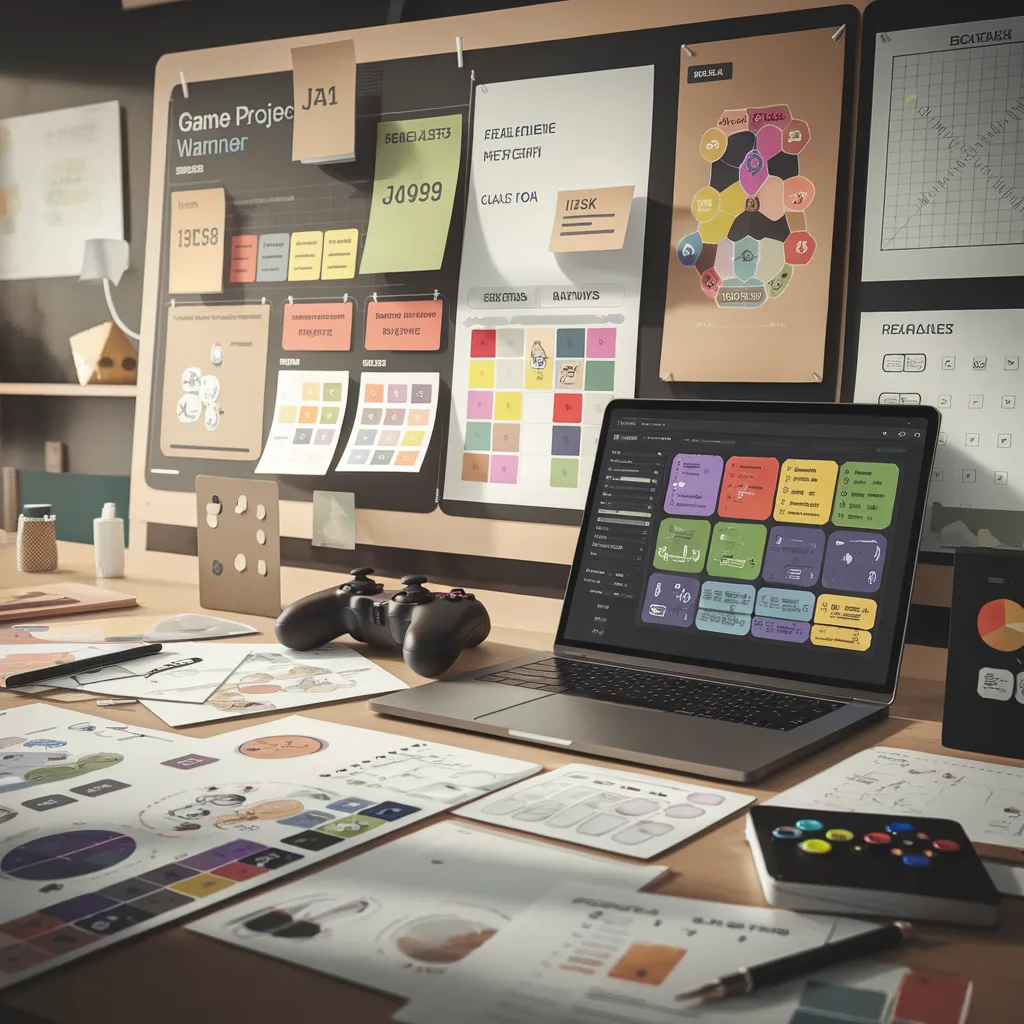
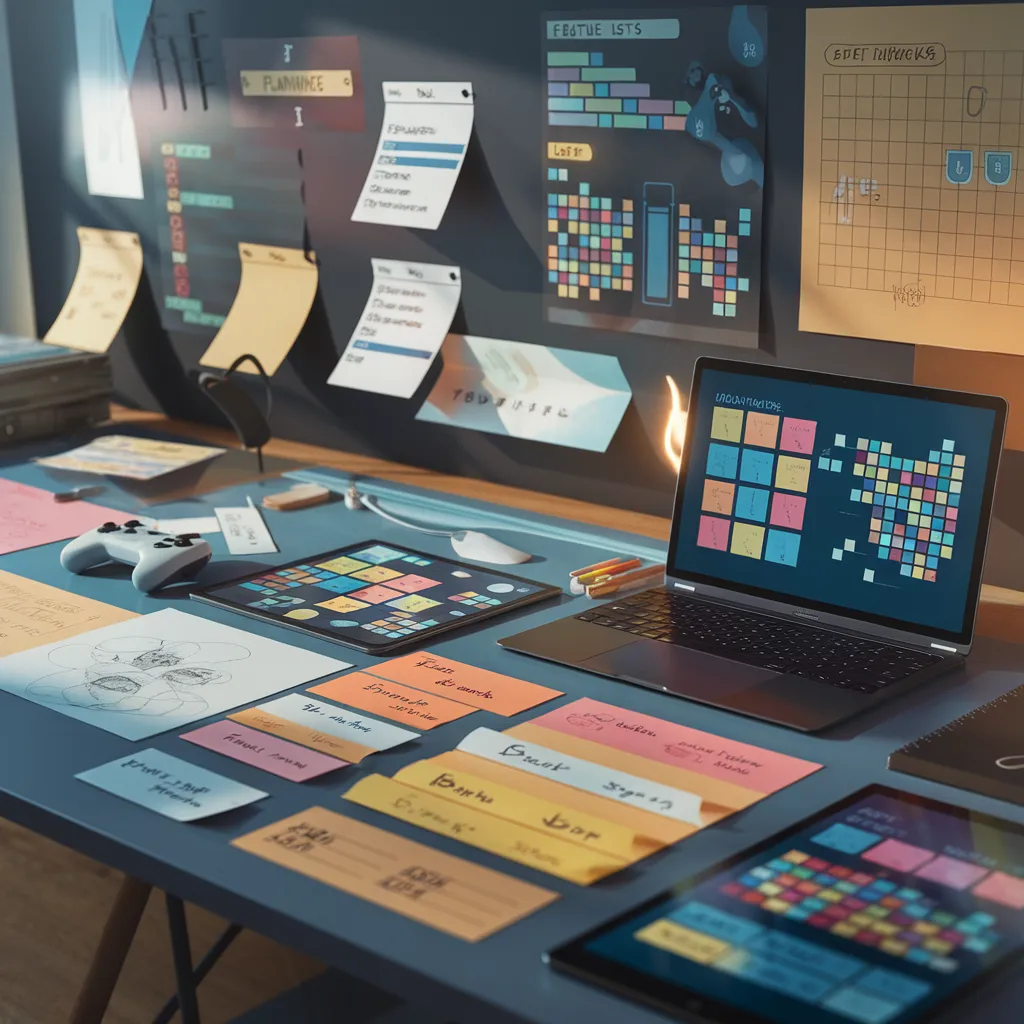
Game Jam Project Planner
48 Hours. 72 Hours. A Week. The Planning System for Making Something Finished — Not Almost Finished.
⏱️ THE GAME JAM POSTMORTEM YOU HAVE ALREADY WRITTEN IN YOUR HEAD
Day one: the theme is announced. Three ideas immediately. One of them is genuinely exciting. You go with the exciting one.
Day one, evening: scope is enormous. You start cutting. The game still has nine systems and you have built two.
Day two, morning: the core mechanic does not feel fun. You are not sure if this is because it is not fun or because it is not finished enough to feel fun. You keep building.
Day two, afternoon: you are implementing UI. The game still does not feel fun. There is a lot left to do.
Day two, evening: crunch mode. The game is playable in the sense that it does not crash. The tutorial is non-existent. The difficulty is either impossible or trivial depending on what the player does first. You submit it because the deadline is in forty minutes.
The jam feedback: “interesting concept, hard to understand what to do.” Every time.
The problem was never the concept. It was the scope, the schedule, and the absence of a plan that forced scope decisions before day two afternoon rather than after.
This planner makes that plan before the jam starts.
📥 Digital download. Available immediately. Print it before the theme drops.
THE PLANNER SECTIONS
PRE-JAM PREPARATION (BEFORE THE THEME IS ANNOUNCED)
The Toolchain Decision Document
The jam is not the time to learn a new engine, a new language, or a new framework. The preparation section forces the decision before the excitement of theme announcement makes bad decisions feel reasonable: the engine and version locked in, the asset pipeline defined (what art style is achievable in the jam’s timeframe with the team’s skills), the audio source confirmed (original, CC-licensed library, or procedural), and the platform target confirmed (browser, Windows, mobile — each has different build and testing implications in a jam timeframe).
The Team Role Allocation
For team jams: the role map that prevents the situation where two people build the same system independently and nobody builds the UI. The responsibility document: who owns programming, who owns art, who owns audio, who owns level design, who owns playtesting, and who owns submission. The communication cadence — how frequently the team syncs, in what format, on what schedule. 🎮
The Pre-Built Asset Library
The generic assets prepared before the theme is announced: the menu system template, the pause screen, the basic UI kit, the score/timer display components, the “game over” and “you win” screens, the loading screen, and the audio player setup. The two to three hours of preparation that saves six hours during the jam.
THE SCOPE FRAMEWORK (FIRST TWO HOURS AFTER THEME ANNOUNCEMENT)
The Concept Filtering Tool
Three concepts, maximum. For each: the core mechanic in one sentence (not the story, not the aesthetic, the mechanic — the thing the player does repeatedly), the minimum viable version (the version of this game that is completable in forty percent of the jam’s total time), and the fun test (is the core mechanic loop interesting on its own, without content, without story, without polish?).
The filter: the concept whose minimum viable version is completable in forty percent of the jam time AND whose core mechanic is interesting in isolation is the right concept. The planner forces this decision in writing before a line of code is written.
The Feature Tier System
Every feature in three buckets:
🟢 CORE — Must ship. The game is unsubmittable without these. The mechanic, the input system, one or two levels, a way to win and a way to lose, and a way to start and restart.
🟡 BONUS — Ship if time allows. The features that make the game better but do not make it unplayable if absent. A second level, sound effects, basic visual polish, a difficulty adjustment.
🔴 DREAM — Cut immediately under time pressure. Everything else. Documented so the ideas are not lost, but explicitly out of scope for submission.
The tier document signed off by the full team at hour two. The document that gets consulted every time a new feature idea surfaces during development. ✂️
The Time Budget
The jam’s total available hours divided across the major development categories with hard caps: programming (the largest allocation but explicitly capped), art (the second largest — the art that is just good enough to communicate rather than impress), audio (the minimum viable allocation — one ambient track and three sound effects is sufficient), level design (lighter than programmers expect), testing and submission (the four hours at the end that most jammers allocate to adding features and then miss). The budget that prevents scope creep by making trade-offs explicit.
THE DEVELOPMENT SCHEDULE (DAILY STRUCTURE)
The Milestone Checkpoints
For a 72-hour jam:
End of Hour 6: The core mechanic is playable. Not polished, not fun necessarily, but the player can perform the primary action and the game responds. If this is not true at hour 6, the scope is wrong and something gets cut.
End of Hour 24: A complete loop exists. The player can start the game, play through to a win or loss condition, and restart. The game is not fun yet. That is acceptable. It is complete.
End of Hour 48: The game is fun. Or at least, it is playable in a way that communicates the intended experience. The CORE tier is fully implemented. BONUS items begin if the schedule is ahead.
End of Hour 66: Submission build tested and working. All CORE items complete. BONUS items that are complete are in. DREAM items are accepted as missing. The final six hours are for polish, bugfixing, and submission preparation only. Zero new features.
The Daily Check-in Template
The ten-minute sync at the end of each development day: what is done, what is in progress, what is blocked, is the current trajectory hitting the next milestone, and does anything need to be cut to protect the schedule? The sync that catches scope creep before it costs a night’s sleep and a failed submission. 📋
THE SUBMISSION PREPARATION CHECKLIST
The submission is part of the game. The checklist: the game description written (the hook, the controls, the intended experience — the text that convinces a jam judge to play this game out of three hundred submissions), the control scheme documented (every input, every action — the jam submission where “controls are in the game” is a rejection for most judges), the known issues acknowledged (the bugs that exist, the content that was cut — the transparency that prevents a negative review for something you already knew), the credits complete, the screenshots taken, the content warning added if applicable, and the web build tested on a different machine from the development machine.
The submission that does the game justice — not just the build, but the presentation. 🏆
📂 COMPLETE FILE LIST
⏱️ Complete planner PDF (print-optimized for desk reference during the jam) | 📊 Scope and feature tier worksheet (editable) | 📅 Time budget calculator by jam length — 48hr, 72hr, 1-week (Excel + Google Sheets) | ✅ Pre-jam preparation checklist (editable) | 🔧 Daily check-in template (editable) | 📋 Submission preparation checklist (editable) | 💡 Concept filtering tool (editable)

Reviews
There are no reviews yet.